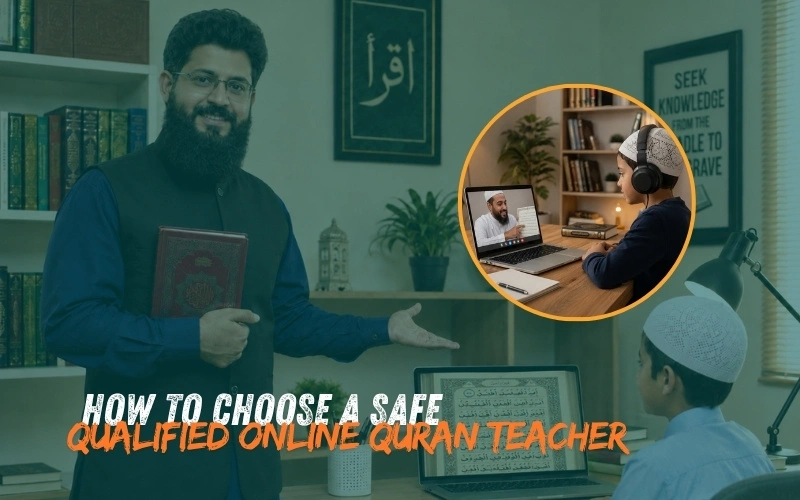
Choosing a safe online Quran teacher for your child comes down to five things you can actually verify before you commit: a real vetting process behind the teacher, a trial class you can observe, transparency about who is teaching, ongoing visibility into your child’s classes, and a clear way to raise concerns. If an academy can’t answer all five clearly, that’s worth treating as a red flag, not a detail to overlook.
If you’ve felt uneasy handing your child’s Quran education over to someone you’ve only spoken to over a screen, you’re not being overly cautious. It’s the single most common concern parents raise before choosing an academy, and it deserves a real, specific answer, not a vague reassurance.
Why This Matters More Than It Used to
Online Quran education has grown fast over the last decade, and with that growth has come real, reported cases of unqualified or unsafe individuals presenting themselves as tutors without any actual vetting behind them. This isn’t a reason to avoid online classes altogether. It’s a reason to be specific about what “safe” actually means for an academy, rather than accepting the word on faith.
The good news: safety and qualification are things you can verify directly, if you know what to ask.
The 5-Point Checklist Before You Enroll
1. Ask exactly how teachers are vetted, not just whether they are
“Our teachers are certified” isn’t an answer, it’s a claim. Ask what the actual process looks like: is there an identity verification step, a live teaching assessment, a background check? An academy with nothing to hide will answer this specifically and won’t get defensive about the question.
2. Take the trial class seriously, not as a formality
A real trial class lets you see the actual teacher your child would have, not a sales demo. Watch how the teacher talks to your child, how patient they are with mistakes, and whether the pace feels right. If an academy pushes you to skip the trial or rushes you into payment first, that’s a sign to slow down.
3. Ask whether you can observe or sit in on classes
You should be able to be present during your child’s lessons, especially in the early weeks, without it being treated as unusual or intrusive. An academy that’s uncomfortable with a parent watching a class is telling you something important.
4. Expect regular, specific updates on progress, not vague reassurance
“Your child is doing great” isn’t a progress report. Ask what kind of updates you’ll actually receive, how often, and whether there’s a way to flag concerns and have them addressed directly, not just acknowledged. Consistent monthly check-ins, with real detail about what’s been covered and what needs work, are a much stronger signal than an academy that only reaches out when there’s a billing issue.
5. If you want a female teacher for your daughter, this should be simple to arrange
This shouldn’t require convincing or repeated follow-up. A well-run academy will have this option ready and will match you without friction.
Warning Signs Worth Taking Seriously
- Pressure to skip the trial class or commit to a long-term payment plan immediately
- Vague or evasive answers when you ask specifically how teachers are vetted
- Reluctance to let you observe a class, especially in the first few weeks
- No clear process for raising a concern, or concerns brushed aside instead of addressed
- Teacher identity that changes without explanation between the trial and the actual classes
None of these alone is necessarily a dealbreaker, but more than one together is worth pausing over.
What a Genuinely Safe Setup Looks Like in Practice
A teacher who’s actually been vetted, not just described as qualified. A trial class you can judge honestly before paying anything. The ability to be present during lessons. Monthly progress updates with real detail, not vague reassurance. A direct way to raise and resolve concerns. This is the standard our teachers are held to, and it’s worth expecting from any academy you’re considering, not just ours.
If you’d prefer a female tutor for your daughter, our female Quran teachers are matched on request, with the same vetting standard applied.
The Bottom Line
Trust shouldn’t be assumed just because an academy has a polished website. It should be something you can verify, step by step, before your child ever starts a lesson. Ask the specific questions above, take the trial seriously, and don’t feel like you’re being difficult by expecting clear answers. A good academy will welcome the questions, not deflect them.
Frequently Asked Questions
What should I ask before my child’s first Quran class? Ask exactly how the teacher was vetted, whether you can observe classes, how progress will be reported to you, and what happens if something isn’t working. Specific answers, not general reassurance, are what to listen for.
Is it normal to want to sit in on my child’s online Quran classes? Yes, completely. A well-run academy should have no issue with a parent being present, especially in the first few weeks while you’re both getting comfortable with the teacher and format.
How do I know if a Quran teacher is actually qualified, not just claiming to be? Ask about their specific credentials, how long they’ve been teaching, and whether the academy verified this before assigning them students, rather than taking a general “certified” label at face value.
What if I’m not happy with the teacher after starting? A reputable academy should make it straightforward to raise the concern and arrange a different teacher if needed, without resistance or repeated follow-up being required on your part.
Ready to see this in practice? Book a free trial class with Urwa Academy and judge the teacher and process for yourself, before committing to anything.